A Full-Size Coach for Large Groups
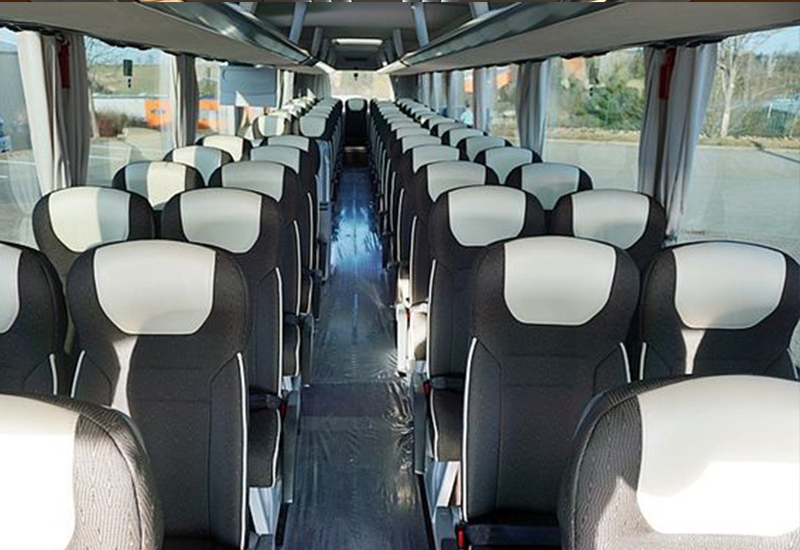
We lead with minibuses and Sprinters, but some occasions simply need more seats. A full-size coach typically carries 49 to 59 people, about 80 on a double-decker, with room for suitcases underneath.
When one big vehicle beats several small ones
Think of a large wedding guest list, a graduating class, a reunion that fills a banquet hall, or a cruise group heading from the ship to the airport. One coach keeps everyone in one place, with a single departure time and a single headcount.
The trade-off is length. At about 45 ft (13.7 m), a coach needs proper set-down space, and many town centres limit where it can stop; Old Québec, for example, keeps coach parking outside its walls. If the day includes narrow lanes or a small venue, several smaller vehicles may get you closer.
Typical models
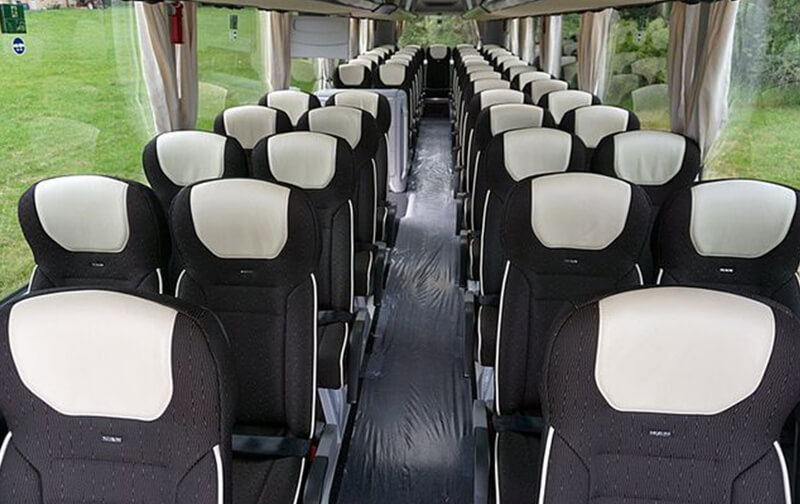
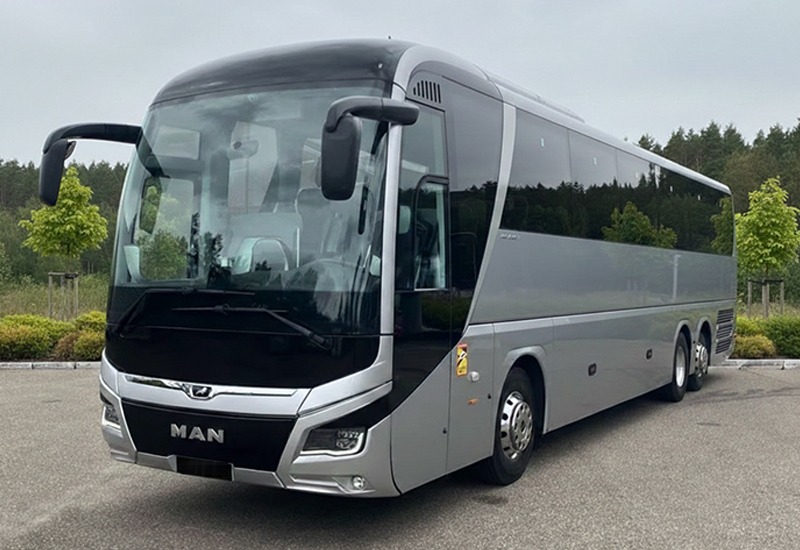
The photos show typical models in this size. Which vehicle runs depends on the licensed operator that takes the booking.
Standard coach (49 seats)
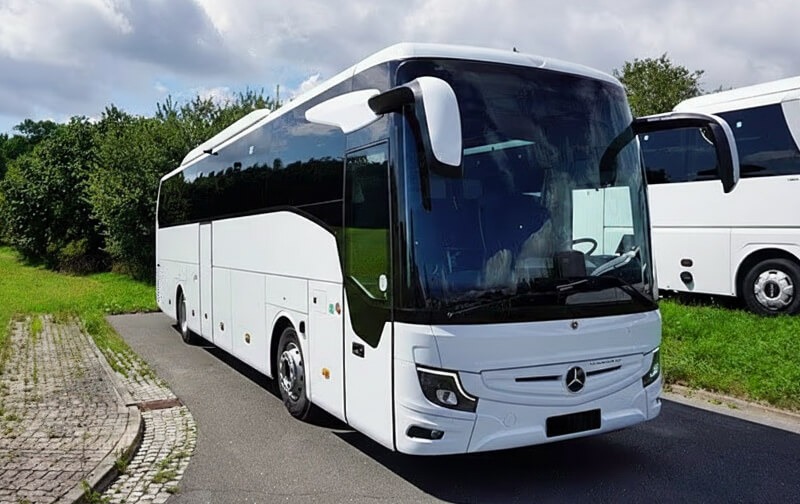
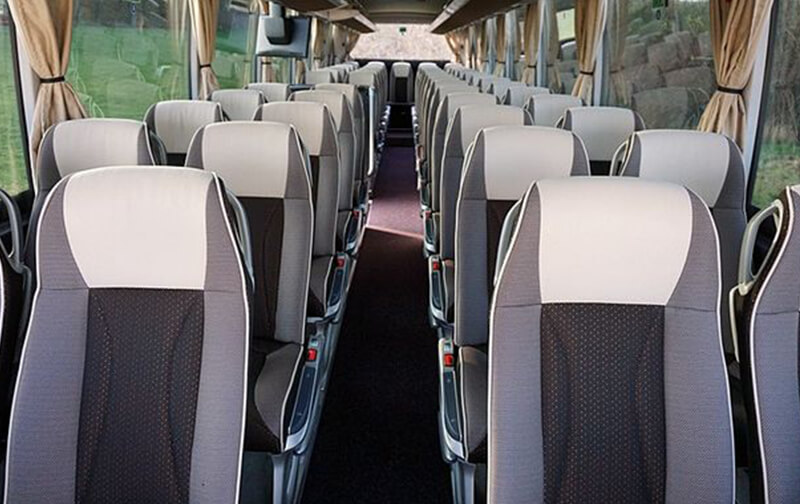
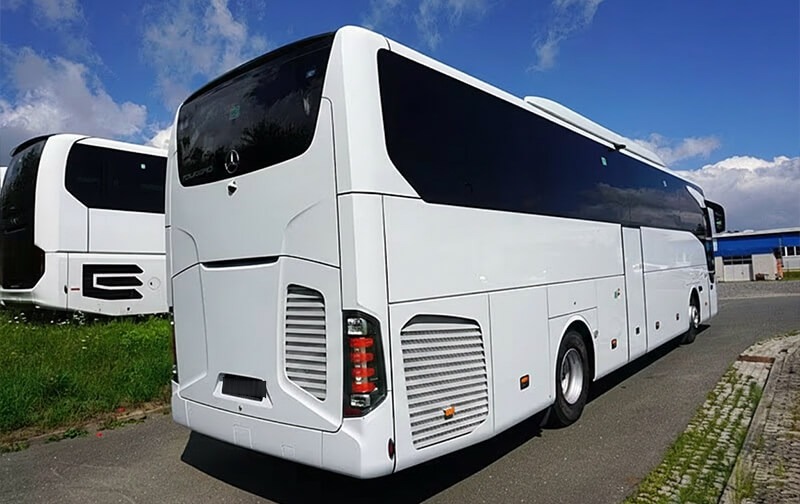
Mercedes Tourismo 15 RHD
49 passengers · 49 bags
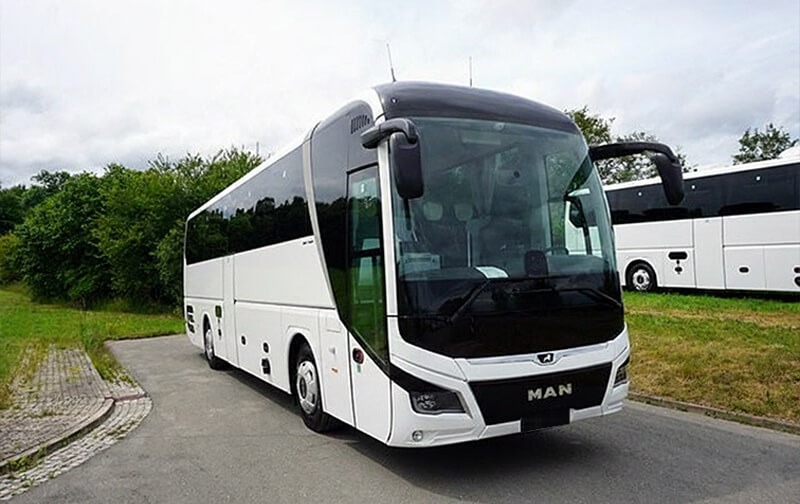
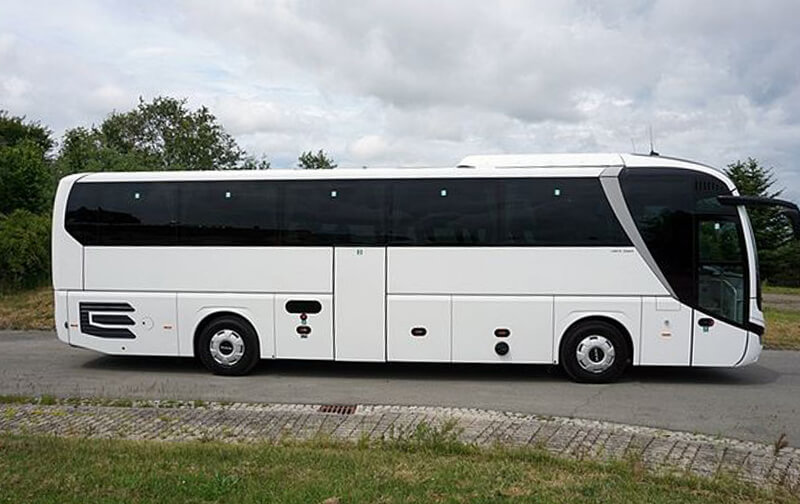
MAN R07 Lion Coach
49 passengers · 49 bags
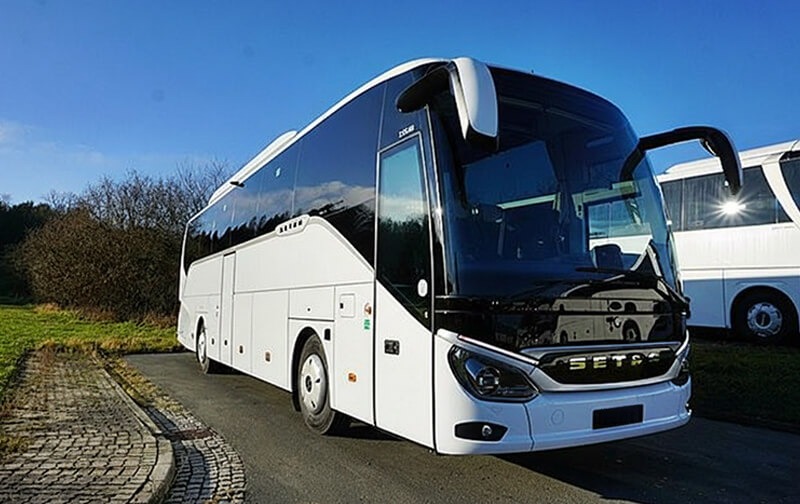
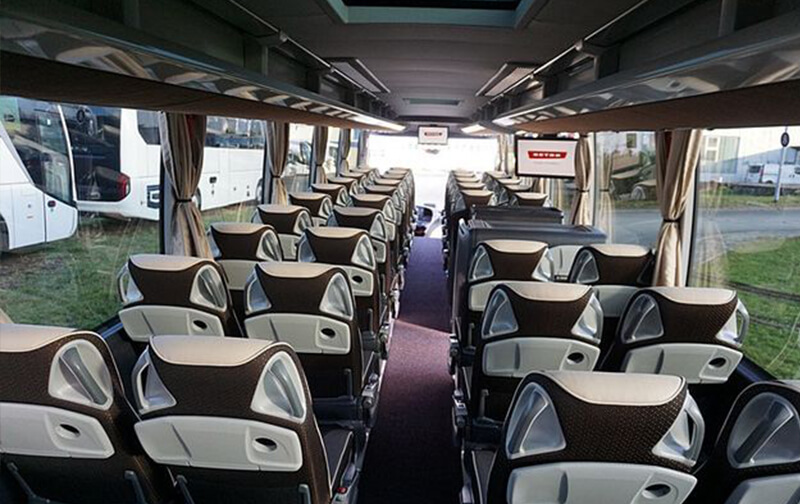
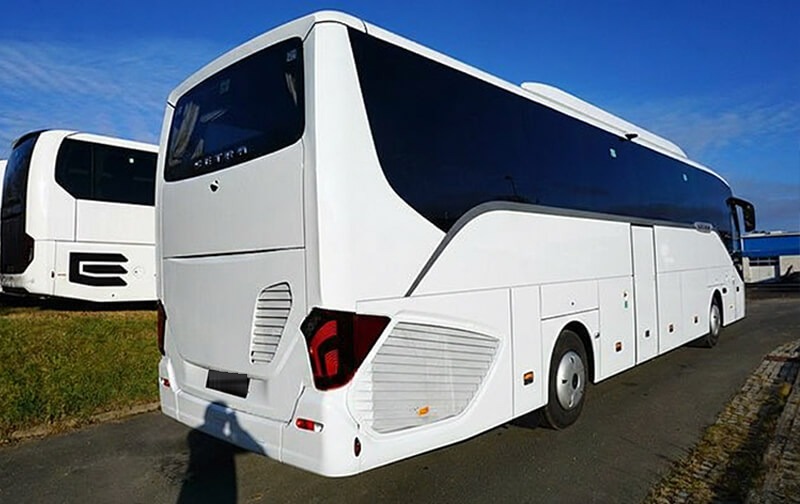
Setra S 515 HD
49 passengers · 49 bags
Large coach (53 to 59 seats)
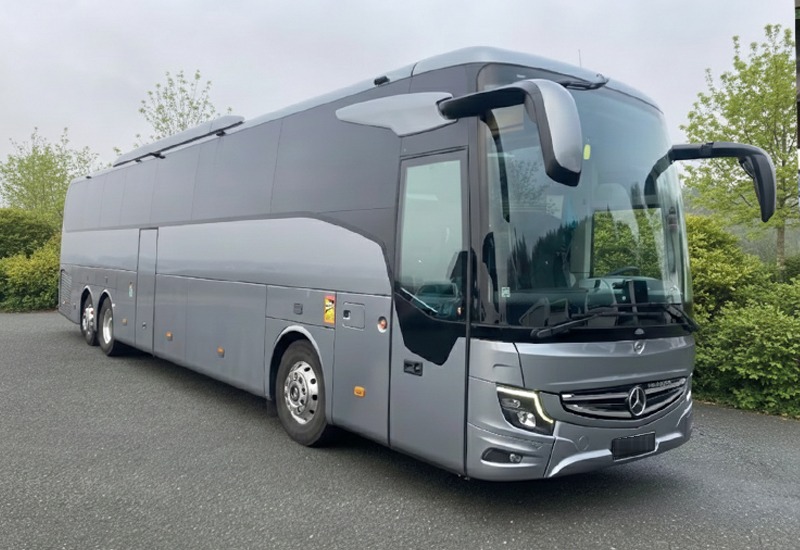
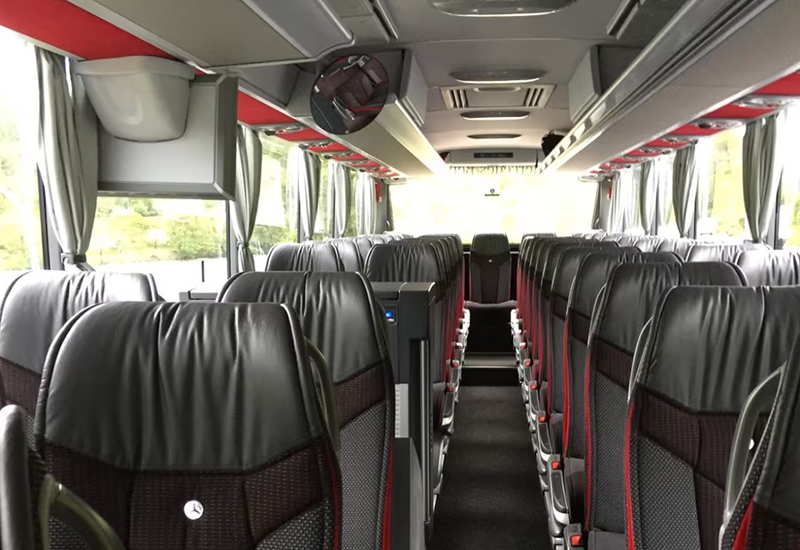
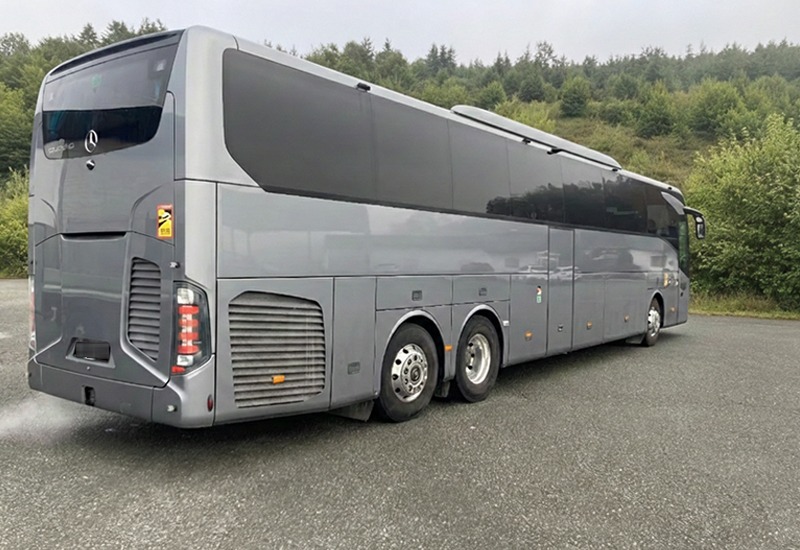
Mercedes Tourismo 17 RHD
59 passengers · 59 bags
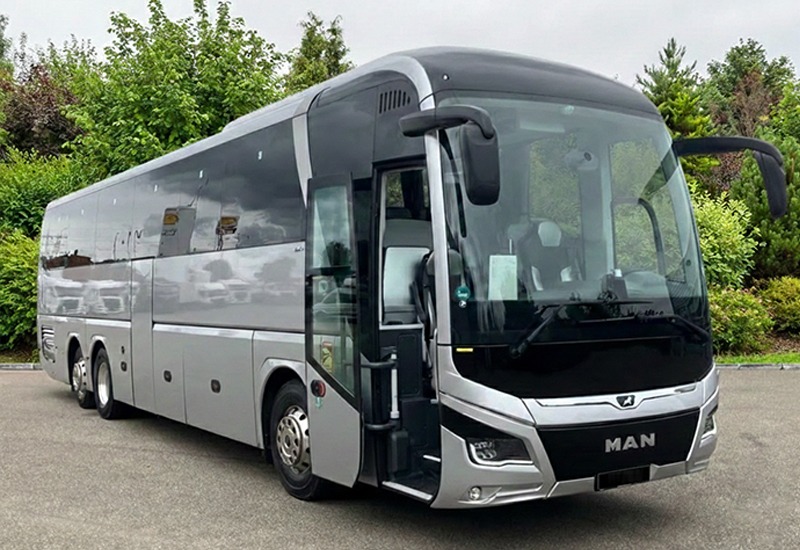
MAN R08 Lion's Coach
57 passengers · 57 bags
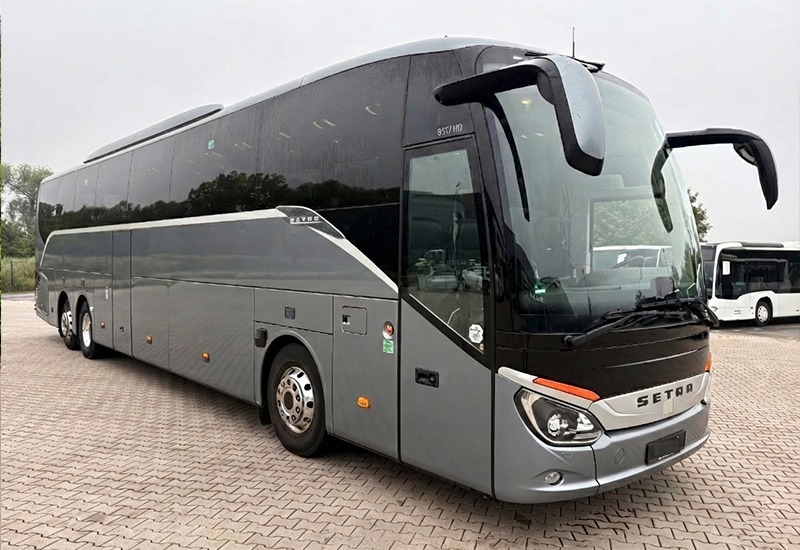
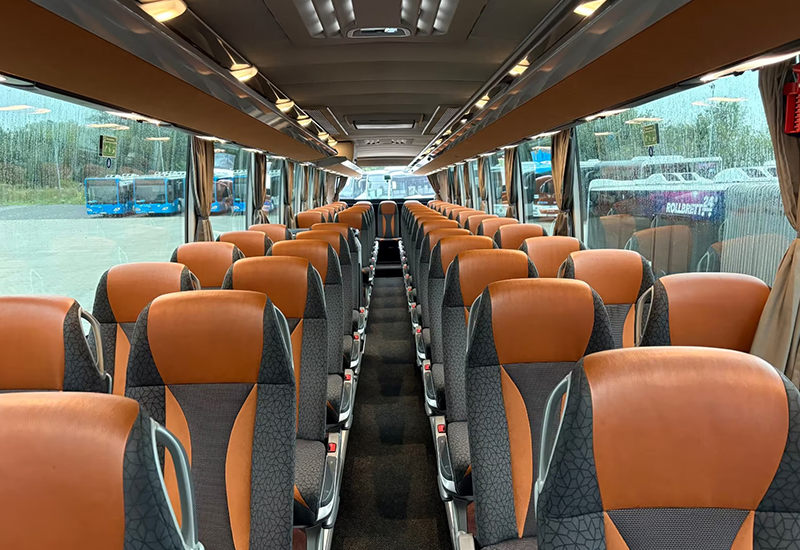
Setra S 517 HD
53 passengers · 53+2 bags
Double-decker coach (around 80 seats)
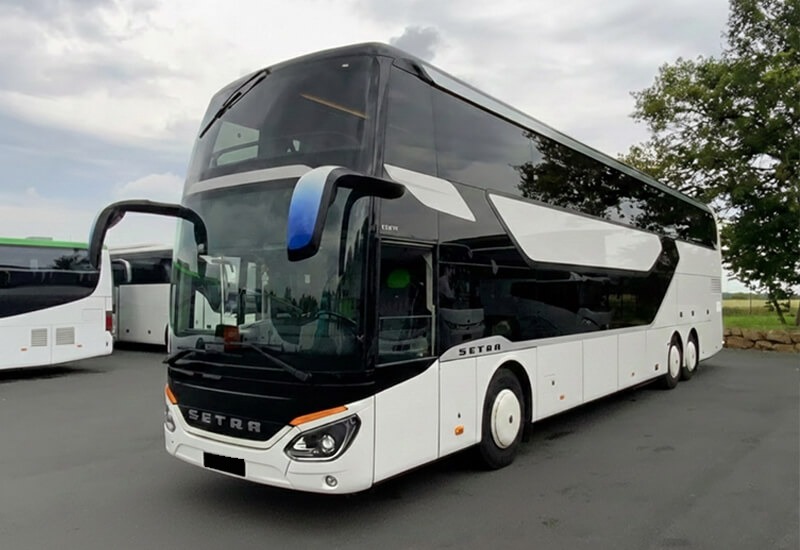
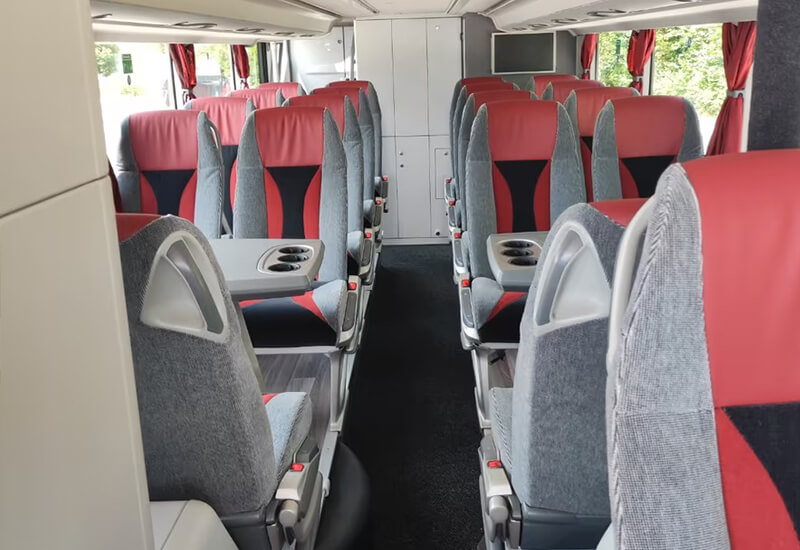
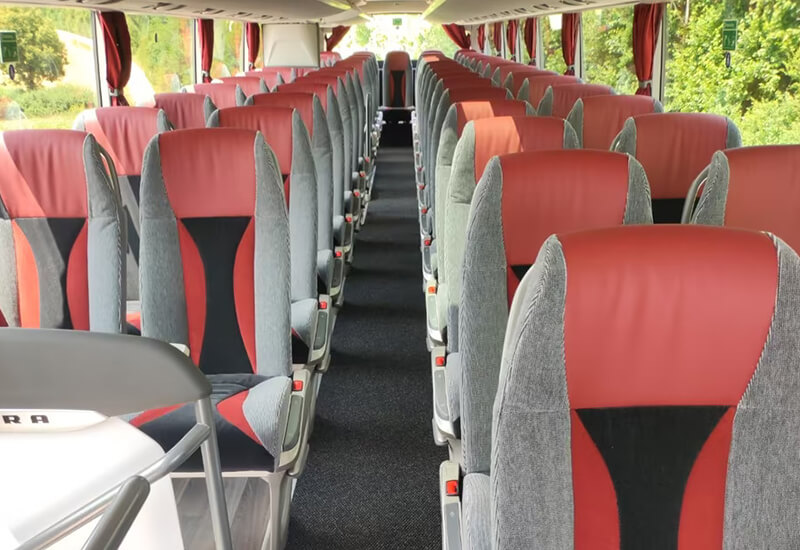
Setra 531 DT
81+2 passengers · 81+2 bags
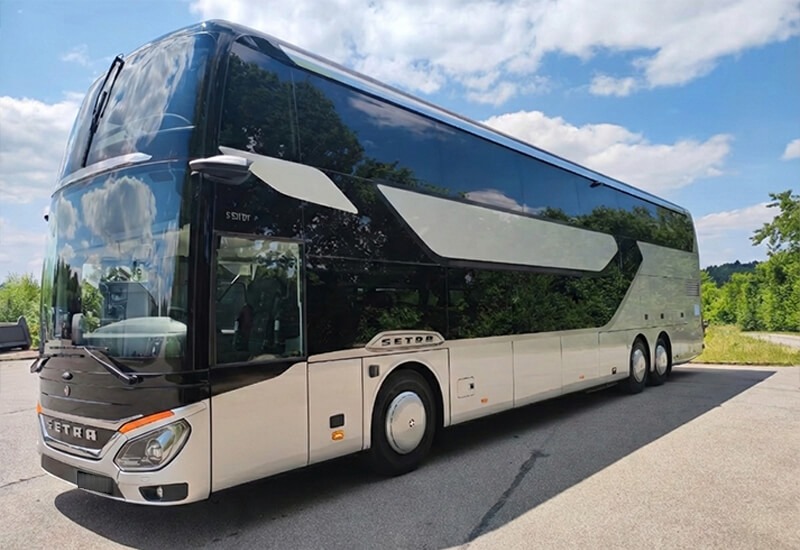
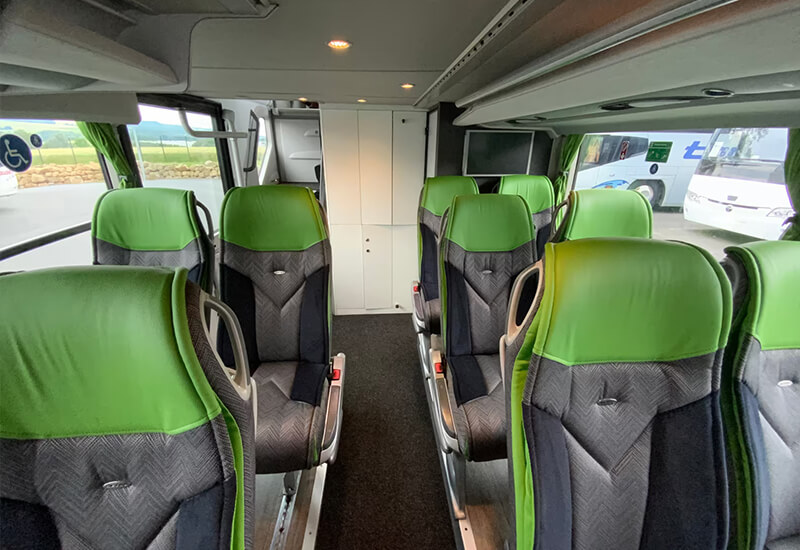
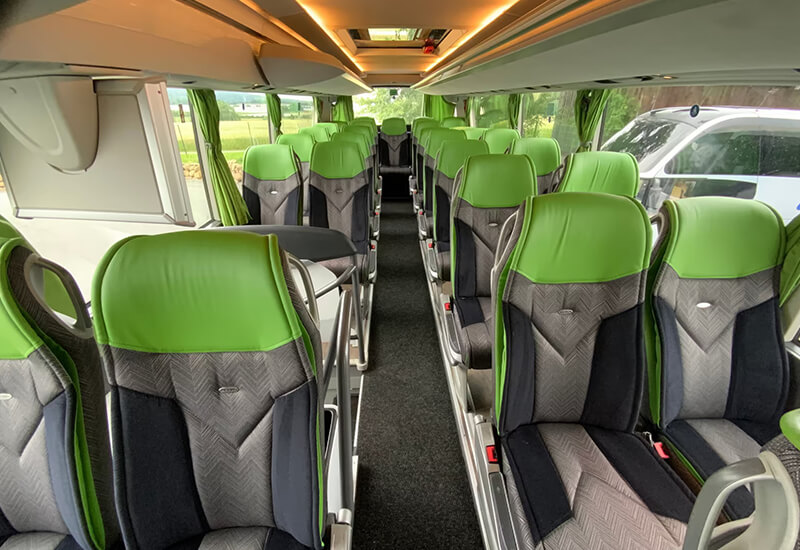
Setra 431 DT
80+1 passengers · 80 bags
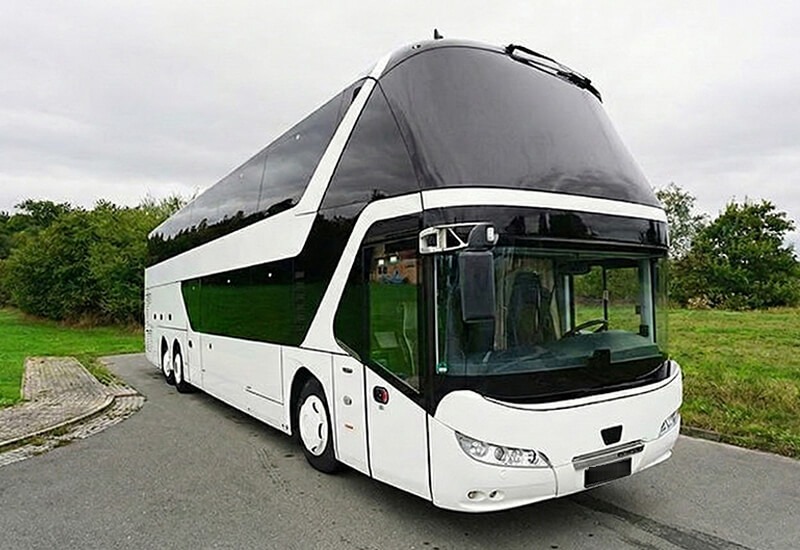
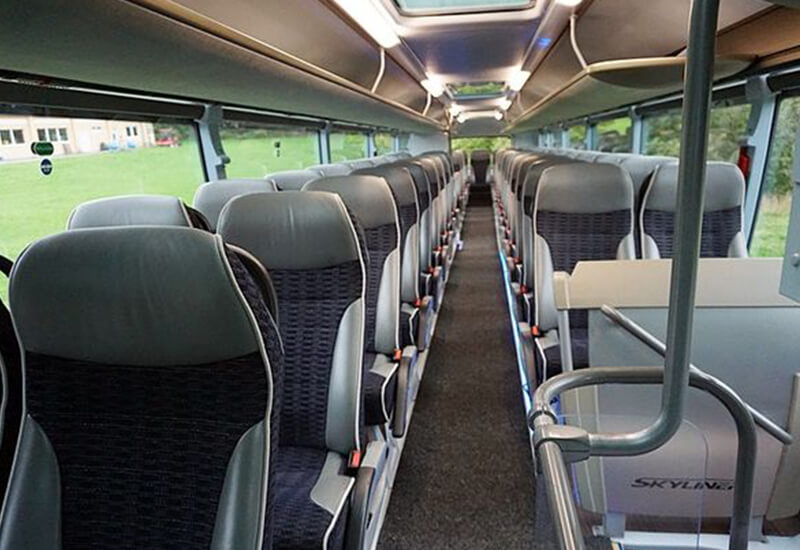
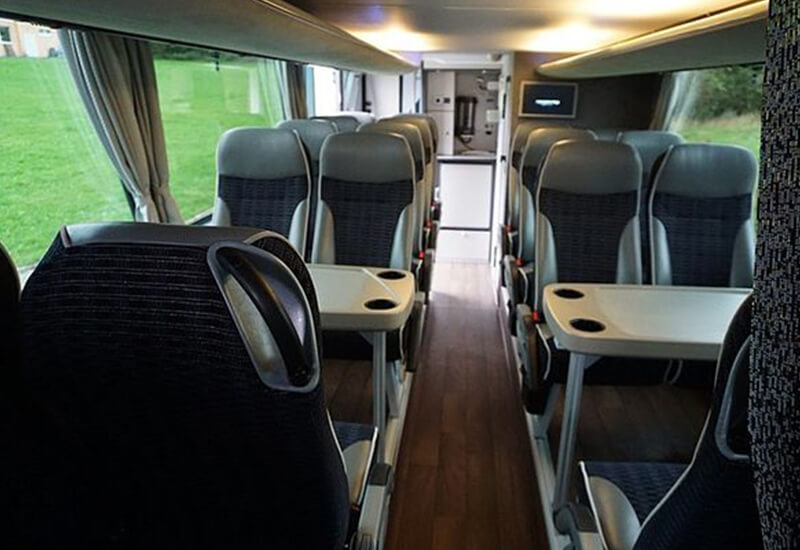
Neoplan Skyliner
79+1 passengers · 79 bags
Belts, licences and permits
Any highway coach built from 1 September 2020 on is required to have seat belts, and Ontario expects passengers to wear one wherever it is fitted. Older coaches may not have them, so mention it if belts matter to your group.
Behind the wheel is a driver with a heavy bus licence: class C in Ontario (plus a Z endorsement for air brakes) or class 2 in Alberta, BC or Québec. The operator holds its own provincial authority, such as an Ontario CVOR, a BC passenger transportation licence, an Alberta Safety Fitness Certificate or a Québec CTQ permit.
On board
- Operator holds provincial authority: Ontario CVOR, BC passenger transportation licence, Alberta Safety Fitness Certificate or Québec CTQ permit
- Across provincial borders, federal hours of service apply: 13 h driving and 14 h on duty a day
- Driver holds Ontario class C, BC class 2, Alberta class 2 or Québec class 2; Ontario air brakes need a Z endorsement
- In Ontario, passengers must wear a seat belt on a bus where one is available
- New highway coaches built on or after September 1, 2020 must have seat belts
- 45 ft (about 13.7 m) touring coach; MCI's J-series lists layouts of up to 60 seats
Tours that cross provinces
On a touring week that runs from Ottawa to Montreal and on to Quebec City, the first leg crosses from Ontario into Quebec, so federal hours of service apply, limiting each driver to 13 driving hours and 14 on-duty hours per day. Share the full itinerary and the operator plans the days, or a second driver, around it.
Your questions
How much luggage fits?
Far more than in a minibus, thanks to the underfloor bays. Mention bulky items such as bikes, skis or instrument cases when you ask.
Can a coach tour Banff National Park?
Yes, with the right paperwork. A vehicle that size needs a park business licence and a commercial pass on display, and the passengers pay commercial group admission.
Is 59 seats the limit?
No. Single-deck layouts typically run from 49 to 59 seats, and a double-decker takes about 80. The quote names the vehicle type and its capacity.